


概述
继续跟中华石杉老师学习ES,第47篇
课程地址: https://www.roncoo.com/view/55
官方说明
Cardinality Aggregation:戳这里
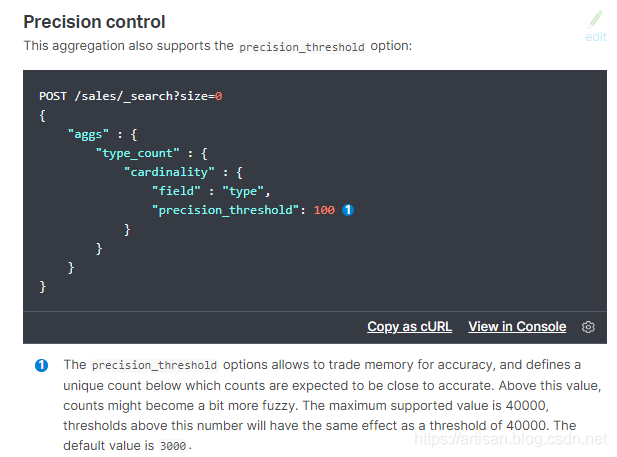
precision_threshold优化准确率和内存开销
原始数据:
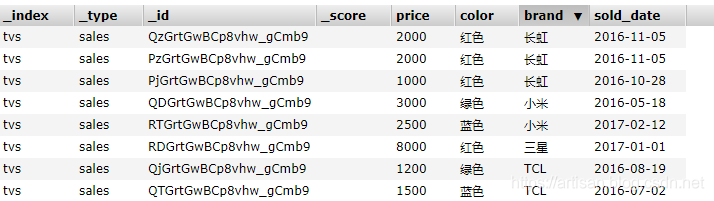
统计下有多少个不同的品牌
DSL:
GET /tvs/sales/_search
{
    "size" : 0,
    "aggs" : {
        "distinct_brand" : {
            "cardinality" : {
              "field" : "brand",
              "precision_threshold" : 100
            }
        }
    }
}
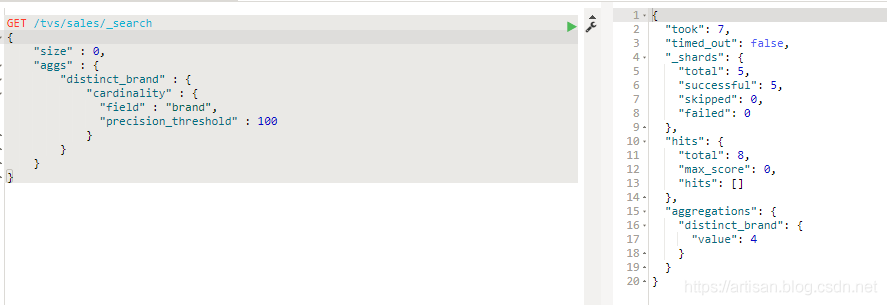
注意下 "precision_threshold" : 100 的意思是: brand去重,如果brand的unique value,在100个以内,小米,长虹,三星,TCL,HTL。。。 在多少个unique value以内,cardinality,几乎保证100%准确 。
cardinality算法,会占用precision_threshold * 8 byte 内存消耗,100 * 8 = 800个字节 占用内存很小。。。而且unique value如果的确在值以内,那么可以确保100%准确
precision_threshold,值设置的越大,占用内存越大, 假设设置 1000,那么1000 * 8 = 8000 / 1000 = 8KB,可以确保更多unique value的场景下,100%的准确
field,去重,count,这时候,unique value,10000, precision_threshold=10000,10000 * 8 = 80000个byte,80KB
HyperLogLog++ (HLL)算法性能优化
cardinality底层算法:HLL算法,HLL算法的性能会对所有的uqniue value取hash值,通过hash值近似去求distcint count,存在误差 .
默认情况下,发送一个cardinality请求的时候,会动态地对所有的field value,取hash值;
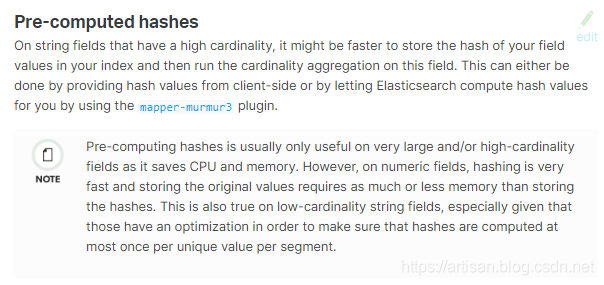
优化的话: 将取hash值的操作,前移到建立索引的时候 ,如下
PUT /tvs/
{
  "mappings": {
    "sales": {
      "properties": {
        "brand": {
          "type": "text",
          "fields": {
            "hash": {
              "type": "murmur3"
            }
          }
        }
      }
    }
  }
}
这样在执行同样的查询的话,就不会在请求的时候执行hash值了。
GET /tvs/sales/_search
{
    "size" : 0,
    "aggs" : {
        "distinct_brand" : {
            "cardinality" : {
              "field" : "brand.hash",
              "precision_threshold" : 100
            }
        }
    }
}




还没有评论,来说两句吧...