

在上一篇的分析中我们已经了解到Bean的依赖注入主要分为两个步骤
- 首先调用createBeanInstance()方法生成 Bean 所包含的 Java对象实例
- 然后调用 populateBean()方法,对 Bean属性的依赖注入进行处理。
现在我们继续分析生成对象后,Spring IOC 容器是如何将 Bean 的属性依赖关系注入 Bean 实例对象中并设置好的。
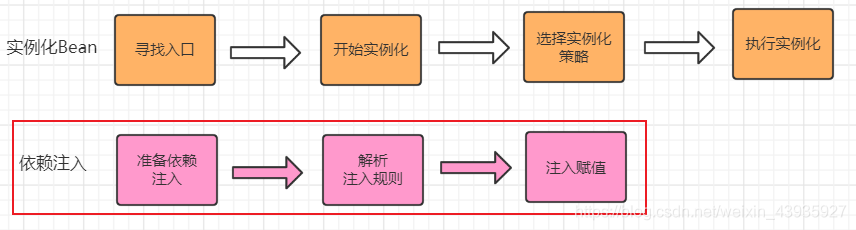
1.准备依赖注入 (AbstractAutowireCapableBeanFactory)
回到AbstractAutowireCapableBeanFactory 的populateBean()方法,对属性依赖注入的代码如下
populateBean()
将Bean属性设置到生成的实例对象上
	protected void populateBean(String beanName, RootBeanDefinition mbd, @Nullable BeanWrapper bw)
    {
		if (bw == null) {
			if (mbd.hasPropertyValues()) {
				throw new BeanCreationException(
						mbd.getResourceDescription(), beanName, "Cannot apply property values to null instance");
			}
			else {
				// Skip property population phase for null instance.
				return;
			}
		}

		// Give any InstantiationAwareBeanPostProcessors the opportunity to modify the state of the bean before properties are set.
		// This can be used, for example,to support styles of field injection.
		boolean continueWithPropertyPopulation = true;

		if (!mbd.isSynthetic() && hasInstantiationAwareBeanPostProcessors()) {
			for (BeanPostProcessor bp : getBeanPostProcessors()) {
				if (bp instanceof InstantiationAwareBeanPostProcessor) {
					InstantiationAwareBeanPostProcessor ibp = (InstantiationAwareBeanPostProcessor) bp;
					if (!ibp.postProcessAfterInstantiation(bw.getWrappedInstance(), beanName)) {
						continueWithPropertyPopulation = false;
						break;
					}
				}
			}
		}

		if (!continueWithPropertyPopulation) {
			return;
		}
		// 获取容器在解析Bean定义资源时为BeanDefiniton中设置的属性值
		PropertyValues pvs = (mbd.hasPropertyValues() ? mbd.getPropertyValues() : null);

		// 对依赖注入处理,首先处理autowiring自动装配的依赖注入
		if (mbd.getResolvedAutowireMode() == RootBeanDefinition.AUTOWIRE_BY_NAME
				|| mbd.getResolvedAutowireMode() == RootBeanDefinition.AUTOWIRE_BY_TYPE) {
			MutablePropertyValues newPvs = new MutablePropertyValues(pvs);

			// Add property values based on autowire by name if applicable.
			// 根据Bean名称进行autowiring自动装配处理
			if (mbd.getResolvedAutowireMode() == RootBeanDefinition.AUTOWIRE_BY_NAME) {
				autowireByName(beanName, mbd, bw, newPvs);
			}

			// Add property values based on autowire by type if applicable.
			// 根据Bean类型进行autowiring自动装配处理
			if (mbd.getResolvedAutowireMode() == RootBeanDefinition.AUTOWIRE_BY_TYPE) {
				autowireByType(beanName, mbd, bw, newPvs);
			}

			pvs = newPvs;
		}

		// 对非autowiring的属性进行依赖注入处理
		boolean hasInstAwareBpps = hasInstantiationAwareBeanPostProcessors();
		boolean needsDepCheck = (mbd.getDependencyCheck() != RootBeanDefinition.DEPENDENCY_CHECK_NONE);

		if (hasInstAwareBpps || needsDepCheck) {
			if (pvs == null) {
				pvs = mbd.getPropertyValues();
			}
			PropertyDescriptor[] filteredPds = filterPropertyDescriptorsForDependencyCheck(bw, mbd.allowCaching);
			if (hasInstAwareBpps) {
				for (BeanPostProcessor bp : getBeanPostProcessors()) {
					if (bp instanceof InstantiationAwareBeanPostProcessor) {
						InstantiationAwareBeanPostProcessor ibp = (InstantiationAwareBeanPostProcessor) bp;
						pvs = ibp.postProcessPropertyValues(pvs, filteredPds, bw.getWrappedInstance(), beanName);
						if (pvs == null) {
							return;
						}
					}
				}
			}
			if (needsDepCheck) {
				checkDependencies(beanName, mbd, filteredPds, pvs);
			}
		}

		if (pvs != null) {
			// 对属性进行注入
			applyPropertyValues(beanName, mbd, bw, pvs);
		}
	}
applyPropertyValues()
解析并注入依赖属性的过程
	protected void applyPropertyValues(String beanName, BeanDefinition mbd, BeanWrapper bw, PropertyValues pvs) {
		if (pvs.isEmpty()) {
			return;
		}

		// 封装属性值
		MutablePropertyValues mpvs = null;
		List<PropertyValue> original;

		if (System.getSecurityManager() != null) {
			if (bw instanceof BeanWrapperImpl) {
				// 设置安全上下文,JDK安全机制
				((BeanWrapperImpl) bw).setSecurityContext(getAccessControlContext());
			}
		}

		if (pvs instanceof MutablePropertyValues) {
			mpvs = (MutablePropertyValues) pvs;
			// 属性值已经转换
			if (mpvs.isConverted()) {
				// Shortcut: use the pre-converted values as-is.
				try {
					// 为实例化对象设置属性值
					bw.setPropertyValues(mpvs);
					return;
				}
				catch (BeansException ex) {
					throw new BeanCreationException(
							mbd.getResourceDescription(), beanName, "Error setting property values", ex);
				}
			}
			// 获取属性值对象的原始类型值
			original = mpvs.getPropertyValueList();
		}
		else {
			original = Arrays.asList(pvs.getPropertyValues());
		}

		// 获取用户自定义的类型转换
		TypeConverter converter = getCustomTypeConverter();
		if (converter == null) {
			converter = bw;
		}
		// 创建一个Bean定义属性值解析器,将Bean定义中的属性值解析为Bean实例对象的实际值
		BeanDefinitionValueResolver valueResolver = new BeanDefinitionValueResolver(this, beanName, mbd, converter);

		// Create a deep copy, resolving any references for values.

		// 为属性的解析值创建一个拷贝,将拷贝的数据注入到实例对象中
		List<PropertyValue> deepCopy = new ArrayList<>(original.size());
		boolean resolveNecessary = false;
		for (PropertyValue pv : original) {
			// 属性值不需要转换
			if (pv.isConverted()) {
				deepCopy.add(pv);
			}
			// 属性值需要转换
			else {
				String propertyName = pv.getName();
				// 原始的属性值,即转换之前的属性值
				Object originalValue = pv.getValue();
				// 转换属性值,例如将引用转换为IOC容器中实例化对象引用
				Object resolvedValue = valueResolver.resolveValueIfNecessary(pv, originalValue);
				// 转换之后的属性值
				Object convertedValue = resolvedValue;
				// 属性值是否可以转换
				boolean convertible = bw.isWritableProperty(propertyName)
							&&!PropertyAccessorUtils.isNestedOrIndexedProperty(propertyName);
				if (convertible) {
					// 使用用户自定义的类型转换器转换属性值
					convertedValue = convertForProperty(resolvedValue, propertyName, bw,
                                                        converter);
				}
				// Possibly store converted value in merged bean definition,
				// in order to avoid re-conversion for every created bean instance.
				// 存储转换后的属性值,避免每次属性注入时的转换工作
				if (resolvedValue == originalValue) {
					if (convertible) {
						//设置属性转换之后的值
						pv.setConvertedValue(convertedValue);
					}
					deepCopy.add(pv);
				}
				// 属性是可转换的,且属性原始值是字符串类型,且属性的原始类型值不是动态生成的字符串,且属性的原始值不是集合或者数组类型
				else if (convertible && originalValue instanceof TypedStringValue
						&& !((TypedStringValue) originalValue).isDynamic()
						&& !(convertedValue instanceof Collection
						|| ObjectUtils.isArray(convertedValue))) {
					pv.setConvertedValue(convertedValue);
					//重新封装属性的值
					deepCopy.add(pv);
				}
				else {
					resolveNecessary = true;
					deepCopy.add(new PropertyValue(pv, convertedValue));
				}
			}
		}
		if (mpvs != null && !resolveNecessary) {
			// 标记属性值已经转换过
			mpvs.setConverted();
		}

		// Set our (possibly massaged) deep copy.
		// 进行属性依赖注入
		try {
			bw.setPropertyValues(new MutablePropertyValues(deepCopy));
		}
		catch (BeansException ex) {
			throw new BeanCreationException(
					mbd.getResourceDescription(), beanName, "Error setting property values", ex);
		}
	}
分析上述代码,我们可以看出,对属性的注入过程分以下两种情况:
- 属性值类型不需要强制转换时,不需要解析属性值,直接准备进行依赖注入。
- 属性值需要进行类型强制转换时,如对其他对象的引用等,首先需要解析属性值,然后对解析后的属性值依赖注入。
- 对属性值的解析是在BeanDefinitionValueResolver类中的resolveValueIfNecessary()方法中进行的,
- 对属性值的依赖注入是通过bw.setPropertyValues()方法实现的,
在分析属性值的依赖注入之前,我们先分析一下对属性值的解析过程。
2.解析属性注入规则 (BeanDefinitionValueResolver)
当容器在对属性进行依赖注入时,如果发现属性值需要进行类型转换,如属性值是容器中另一个 Bean实例对象的引用,则容器首先需要根据属性值解析出所引用的对象,然后才能将该引用对象注入到目标实例对象的属性上去,对属性进行解析的由resolveValueIfNecessary()方法实现,其源码如下:
resolveValueIfNecessary()
解析属性值,对注入类型进行转换
 	@Nullable
	public Object resolveValueIfNecessary(Object argName, @Nullable Object value) {
		// We must check each value to see whether it requires a runtime reference
		// to another bean to be resolved.
		// 对引用类型的属性进行解析
		if (value instanceof RuntimeBeanReference) {
			RuntimeBeanReference ref = (RuntimeBeanReference) value;
			// 调用引用类型属性的解析方法
			return resolveReference(argName, ref);
		}
		// 对属性值是引用容器中另一个Bean名称的解析
		else if (value instanceof RuntimeBeanNameReference) {
			String refName = ((RuntimeBeanNameReference) value).getBeanName();
			refName = String.valueOf(doEvaluate(refName));
			// 从容器中获取指定名称的Bean
			if (!this.beanFactory.containsBean(refName)) {
				throw new BeanDefinitionStoreException(
						"Invalid bean name '" + refName + "' in bean reference for " + argName);
			}
			return refName;
		}
		// 对Bean类型属性的解析,主要是Bean中的内部类
		else if (value instanceof BeanDefinitionHolder) {
			// Resolve BeanDefinitionHolder: contains BeanDefinition with name and aliases.
			BeanDefinitionHolder bdHolder = (BeanDefinitionHolder) value;
			return resolveInnerBean(argName, bdHolder.getBeanName(), bdHolder.getBeanDefinition());
		}
		else if (value instanceof BeanDefinition) {
			// Resolve plain BeanDefinition, without contained name: use dummy name.
			BeanDefinition bd = (BeanDefinition) value;
			String innerBeanName = "(inner bean)" + BeanFactoryUtils.GENERATED_BEAN_NAME_SEPARATOR
											+ ObjectUtils.getIdentityHexString(bd);
			return resolveInnerBean(argName, innerBeanName, bd);
		}
		// 对集合数组类型的属性解析
		else if (value instanceof ManagedArray) {
			// May need to resolve contained runtime references.
			ManagedArray array = (ManagedArray) value;
			// 获取数组的类型
			Class<?> elementType = array.resolvedElementType;
			if (elementType == null) {
				// 获取数组元素的类型
				String elementTypeName = array.getElementTypeName();
				if (StringUtils.hasText(elementTypeName)) {
					try {
						// 使用反射机制创建指定类型的对象
						elementType = ClassUtils.forName(elementTypeName, this.beanFactory.getBeanClassLoader());
						array.resolvedElementType = elementType;
					}
					catch (Throwable ex) {
						// Improve the message by showing the context.
						throw new BeanCreationException(
								this.beanDefinition.getResourceDescription(), this.beanName,
								"Error resolving array type for " + argName, ex);
					}
				}
				// 没有获取到数组的类型,也没有获取到数组元素的类型,则直接设置数组的类型为Object
				else {
					elementType = Object.class;
				}
			}
			// 创建指定类型的数组
			return resolveManagedArray(argName, (List<?>) value, elementType);
		}
		// 解析list类型的属性值
		else if (value instanceof ManagedList) {
			// May need to resolve contained runtime references.
			return resolveManagedList(argName, (List<?>) value);
		}
		// 解析set类型的属性值
		else if (value instanceof ManagedSet) {
			// May need to resolve contained runtime references.
			return resolveManagedSet(argName, (Set<?>) value);
		}
		// 解析map类型的属性值
		else if (value instanceof ManagedMap) {
			// May need to resolve contained runtime references.
			return resolveManagedMap(argName, (Map<?, ?>) value);
		}
		// 解析props类型的属性值,props其实就是key和value均为字符串的map
		else if (value instanceof ManagedProperties) {
			Properties original = (Properties) value;
			// 创建一个拷贝,用于作为解析后的返回值
			Properties copy = new Properties();
			original.forEach((propKey, propValue) -> {
				if (propKey instanceof TypedStringValue) {
					propKey = evaluate((TypedStringValue) propKey);
				}
				if (propValue instanceof TypedStringValue) {
					propValue = evaluate((TypedStringValue) propValue);
				}
				if (propKey == null || propValue == null) {
					throw new BeanCreationException(
							this.beanDefinition.getResourceDescription(), this.beanName,
							"Error converting Properties key/value pair for " + argName + ":
                        resolved to null");
				}
				copy.put(propKey, propValue);
			});
			return copy;
		}
		// 解析字符串类型的属性值
		else if (value instanceof TypedStringValue) {
			// Convert value to target type here.
			TypedStringValue typedStringValue = (TypedStringValue) value;
			Object valueObject = evaluate(typedStringValue);
			try {
				// 获取属性的目标类型
				Class<?> resolvedTargetType = resolveTargetType(typedStringValue);
				if (resolvedTargetType != null) {
					// 对目标类型的属性进行解析,递归调用
					return this.typeConverter.convertIfNecessary(valueObject,
                                                                 resolvedTargetType);
				}
				// 没有获取到属性的目标对象,则按Object类型返回
				else {
					return valueObject;
				}
			}
			catch (Throwable ex) {
				// Improve the message by showing the context.
				throw new BeanCreationException(
						this.beanDefinition.getResourceDescription(), this.beanName,
						"Error converting typed String value for " + argName, ex);
			}
		}
		else if (value instanceof NullBean) {
			return null;
		}
		else {
			return evaluate(value);
		}
	}
resolveReference
解析引用类型的属性值
	@Nullable
	private Object resolveReference(Object argName, RuntimeBeanReference ref) {
		try {
			Object bean;
			// 获取引用的Bean名称
			String refName = ref.getBeanName();
			refName = String.valueOf(doEvaluate(refName));
			// 如果引用的对象在父类容器中,则从父类容器中获取指定的引用对象
			if (ref.isToParent()) {
				if (this.beanFactory.getParentBeanFactory() == null) {
					throw new BeanCreationException(
							this.beanDefinition.getResourceDescription(), this.beanName,
							"Can't resolve reference to bean '" + refName +"' in parent factory: no parent factory available");
				}
				bean = this.beanFactory.getParentBeanFactory().getBean(refName);
			}
			// 从当前的容器中获取指定的引用Bean对象,如果指定的Bean没有被实例化,则会递归触发引用Bean的初始化和依赖注入
			else {
				bean = this.beanFactory.getBean(refName);
				// 将当前实例化对象的依赖引用对象
				this.beanFactory.registerDependentBean(refName, this.beanName);
			}
			if (bean instanceof NullBean) {
				bean = null;
			}
			return bean;
		}
		catch (BeansException ex) {
			throw new BeanCreationException(
					this.beanDefinition.getResourceDescription(), this.beanName,
					"Cannot resolve reference to bean '" + ref.getBeanName() + "' while setting " + argName, ex);
		}
	}
resolveManagedArray()
解析array类型的属性
	private Object resolveManagedArray(Object argName, List<?> ml, Class<?> elementType) {
		// 创建一个指定类型的数组,用于存放和返回解析后的数组
		Object resolved = Array.newInstance(elementType, ml.size());
		for (int i = 0; i < ml.size(); i++) {
			// 递归解析array的每一个元素,并将解析后的值设置到resolved数组中,索引为i
			Array.set(resolved, i,resolveValueIfNecessary(new KeyedArgName(argName, i), ml.get(i)));
		}
		return resolved;
	}
通过上面的代码分析,我们明白了Spring是如何将引用类型,内部类以及集合类型等属性进行解析的,属性值解析完成后就可以进行依赖注入了。
依赖注入的过程就是Bean对象实例设置到它所依赖的Bean对象属性上去。而真正的依赖注入是通过bw.setPropertyValues()方法实现的,该方法也使用了委托模式,在 BeanWrapper 接口中至少定义了方法声明,依赖注入的具体实现交由其实现类BeanWrapperImpl来完成。
下面我们就分析依BeanWrapperImpl中赖注入相关的源码。
3.注入赋值 (AbstractNestablePropertyAccessor)
BeanWrapperImpl类主要是对容器中完成初始化的 Bean 实例对象进行属性的依赖注入,即把 Bean 对象设置到它所依赖的另一个 Bean 的属性中去。然而,BeanWrapperImpl 中的注入方法实际上由 AbstractNestablePropertyAccessor来实现的,其相关源码如下:
setPropertyValue()
实现属性依赖注入功能
	protected void setPropertyValue(PropertyTokenHolder tokens, PropertyValue pv) throws BeansException {
		if (tokens.keys != null) {
			processKeyedProperty(tokens, pv);
		}
		else {
			processLocalProperty(tokens, pv);
		}
	}
processKeyedProperty()
实现集合属性依赖注入
	@SuppressWarnings("unchecked")
	private void processKeyedProperty(PropertyTokenHolder tokens, PropertyValue pv) {
		// 调用属性的getter方法,获取属性的值
		Object propValue = getPropertyHoldingValue(tokens);
		PropertyHandler ph = getLocalPropertyHandler(tokens.actualName);
		if (ph == null) {
			throw new InvalidPropertyException(
					getRootClass(), this.nestedPath + tokens.actualName, "No property handler found");
		}
		Assert.state(tokens.keys != null, "No token keys");
		String lastKey = tokens.keys[tokens.keys.length - 1];

		// 注入array类型的属性值
		if (propValue.getClass().isArray()) {
			Class<?> requiredType = propValue.getClass().getComponentType();
			int arrayIndex = Integer.parseInt(lastKey);
			Object oldValue = null;
			try {
				if (isExtractOldValueForEditor() && arrayIndex < Array.getLength(propValue)) {
					oldValue = Array.get(propValue, arrayIndex);
				}
				Object convertedValue = convertIfNecessary(tokens.canonicalName, oldValue, pv.getValue(),
														requiredType, ph.nested(tokens.keys.length));
				// 获取集合类型属性的长度
				int length = Array.getLength(propValue);
				if (arrayIndex >= length && arrayIndex < this.autoGrowCollectionLimit) {
					Class<?> componentType = propValue.getClass().getComponentType();
					Object newArray = Array.newInstance(componentType, arrayIndex + 1);
					System.arraycopy(propValue, 0, newArray, 0, length);
					setPropertyValue(tokens.actualName, newArray);
					// 调用属性的getter方法,获取属性的值
					propValue = getPropertyValue(tokens.actualName);
				}
				// 将属性的值赋值给数组中的元素
				Array.set(propValue, arrayIndex, convertedValue);
			}
			catch (IndexOutOfBoundsException ex) {
				throw new InvalidPropertyException(getRootClass(), this.nestedPath + tokens.canonicalName,
						"Invalid array index in property path '" + tokens.canonicalName + "'", ex);
			}
		}

		// 注入list类型的属性值
		else if (propValue instanceof List) {
			// 获取list集合的类型
			Class<?> requiredType = ph.getCollectionType(tokens.keys.length);
			List<Object> list = (List<Object>) propValue;
			// 获取list集合的size
			int index = Integer.parseInt(lastKey);
			Object oldValue = null;
			if (isExtractOldValueForEditor() && index < list.size()) {
				oldValue = list.get(index);
			}
			// 获取list解析后的属性值
			Object convertedValue = convertIfNecessary(tokens.canonicalName, oldValue, pv.getValue(),
													requiredType, ph.nested(tokens.keys.length));
			int size = list.size();
			// 如果list的长度大于属性值的长度,则多余的元素赋值为null
			if (index >= size && index < this.autoGrowCollectionLimit) {
				for (int i = size; i < index; i++) {
					try {
						list.add(null);
					}
					catch (NullPointerException ex) {
						throw new InvalidPropertyException(getRootClass(), this.nestedPath + tokens.canonicalName,
								"Cannot set element with index " + index + " in List of size " + size
								  + ", accessed using property path '" + tokens.canonicalName
								  +"': List does not support filling up gaps with null elements");
					}
				}
				list.add(convertedValue);
			}
			else {
				try {
					// 将值添加到list中
					list.set(index, convertedValue);
				}
				catch (IndexOutOfBoundsException ex) {
					throw new InvalidPropertyException(getRootClass(), this.nestedPath + tokens.canonicalName,
							"Invalid list index in property path '" + tokens.canonicalName + "'", ex);
				}
			}
		}

		// 注入map类型的属性值
		else if (propValue instanceof Map) {
			// 获取map集合key的类型
			Class<?> mapKeyType = ph.getMapKeyType(tokens.keys.length);
			// 获取map集合value的类型
			Class<?> mapValueType = ph.getMapValueType(tokens.keys.length);
			Map<Object, Object> map = (Map<Object, Object>) propValue;
			// IMPORTANT: Do not pass full property name in here - property editors
			// must not kick in for map keys but rather only for map values.
			TypeDescriptor typeDescriptor = TypeDescriptor.valueOf(mapKeyType);
			// 解析map类型属性key值
			Object convertedMapKey = convertIfNecessary(null, null, lastKey, mapKeyType, typeDescriptor);
			Object oldValue = null;
			if (isExtractOldValueForEditor()) {
				oldValue = map.get(convertedMapKey);
			}
			// Pass full property name and old value in here, since we want full
			// conversion ability for map values.
			// 解析map类型属性value值
			Object convertedMapValue = convertIfNecessary(tokens.canonicalName, oldValue, pv.getValue(),
					mapValueType, ph.nested(tokens.keys.length));
			// 将解析后的key和value值赋值给map集合属性
			map.put(convertedMapKey, convertedMapValue);
		}

		else {
			throw new InvalidPropertyException(getRootClass(), this.nestedPath + tokens.canonicalName,
					"Property referenced in indexed property path '" + tokens.canonicalName
					+"' is neither an array nor a List nor a Map; returned value was [" + propValue + "]");
		}
	}
getPropertyHoldingValue()
	private Object getPropertyHoldingValue(PropertyTokenHolder tokens) {
		// Apply indexes and map keys: fetch value for all keys but the last one.
		Assert.state(tokens.keys != null, "No token keys");
		PropertyTokenHolder getterTokens = new PropertyTokenHolder(tokens.actualName);
		getterTokens.canonicalName = tokens.canonicalName;
		getterTokens.keys = new String[tokens.keys.length - 1];
		System.arraycopy(tokens.keys, 0, getterTokens.keys, 0, tokens.keys.length - 1);

		Object propValue;
		try {
			// 获取属性值
			propValue = getPropertyValue(getterTokens);
		}
		catch (NotReadablePropertyException ex) {
			throw new NotWritablePropertyException(getRootClass(), this.nestedPath + tokens.canonicalName,
					"Cannot access indexed value in property referenced "
					+ "in indexed property path '" + tokens.canonicalName + "'", ex);
		}

		if (propValue == null) {
			// null map value case
			if (isAutoGrowNestedPaths()) {
				int lastKeyIndex = tokens.canonicalName.lastIndexOf('[');
				getterTokens.canonicalName = tokens.canonicalName.substring(0, lastKeyIndex);
				propValue = setDefaultValue(getterTokens);
			}
			else {
				throw new NullValueInNestedPathException(getRootClass(), this.nestedPath + tokens.canonicalName,
						"Cannot access indexed value in property referenced " +"in indexed property path '"
						+ tokens.canonicalName + "': returned null");
			}
		}
		return propValue;
	}
processLocalProperty()
对非集合类型的处理
	@SuppressWarnings("unchecked")
	private void processKeyedProperty(PropertyTokenHolder tokens, PropertyValue pv) {
         AbstractNestablePropertyAccessor.PropertyHandler ph = getLocalPropertyHandler(actualName);
         Object oldValue = null;
         try {
             Object originalValue = pv.getValue();
             Object valueToApply = originalValue;
             if (!Boolean.FALSE.equals(pv.conversionNecessary)) {
                 if (pv.isConverted()) {
                     valueToApply = pv.getConvertedValue();
                 }else {
                     if (isExtractOldValueForEditor() && ph.isReadable()) {
                         try {
                             oldValue = ph.getValue();
                         }catch (Exception ex) {}
                     }
                     valueToApply = convertForProperty(propertyName, oldValue, originalValue, ph.toTypeDescriptor());
                 }
                 pv.getOriginalPropertyValue().conversionNecessary = (valueToApply != originalValue);
             }
              // 通过反射注入
             ph.setValue(object, valueToApply);
             }
         }
     }
setValue()
 public void setValue(final Object object, Object valueToApply) throws Exception {
     final Method writeMethod = this.pd.getWriteMethod();
     if (!Modifier.isPublic(writeMethod.getDeclaringClass().getModifiers()) && !writeMethod.isAccessible()) {
         if (System.getSecurityManager() != null) {
             AccessController.doPrivileged(new PrivilegedAction<Object>() {
                 @Override
                 public Object run() {
                     writeMethod.setAccessible(true);
                     return null;
                 }
             });
         } else {
             writeMethod.setAccessible(true);
         }
     }
     final Object value = valueToApply;
     if (System.getSecurityManager() != null) {
     } else {
         // 通过反射 用set 方法注入属性
         writeMethod.invoke(getWrappedInstance(), value);
     }
 }

还没有评论,来说两句吧...